

Overview
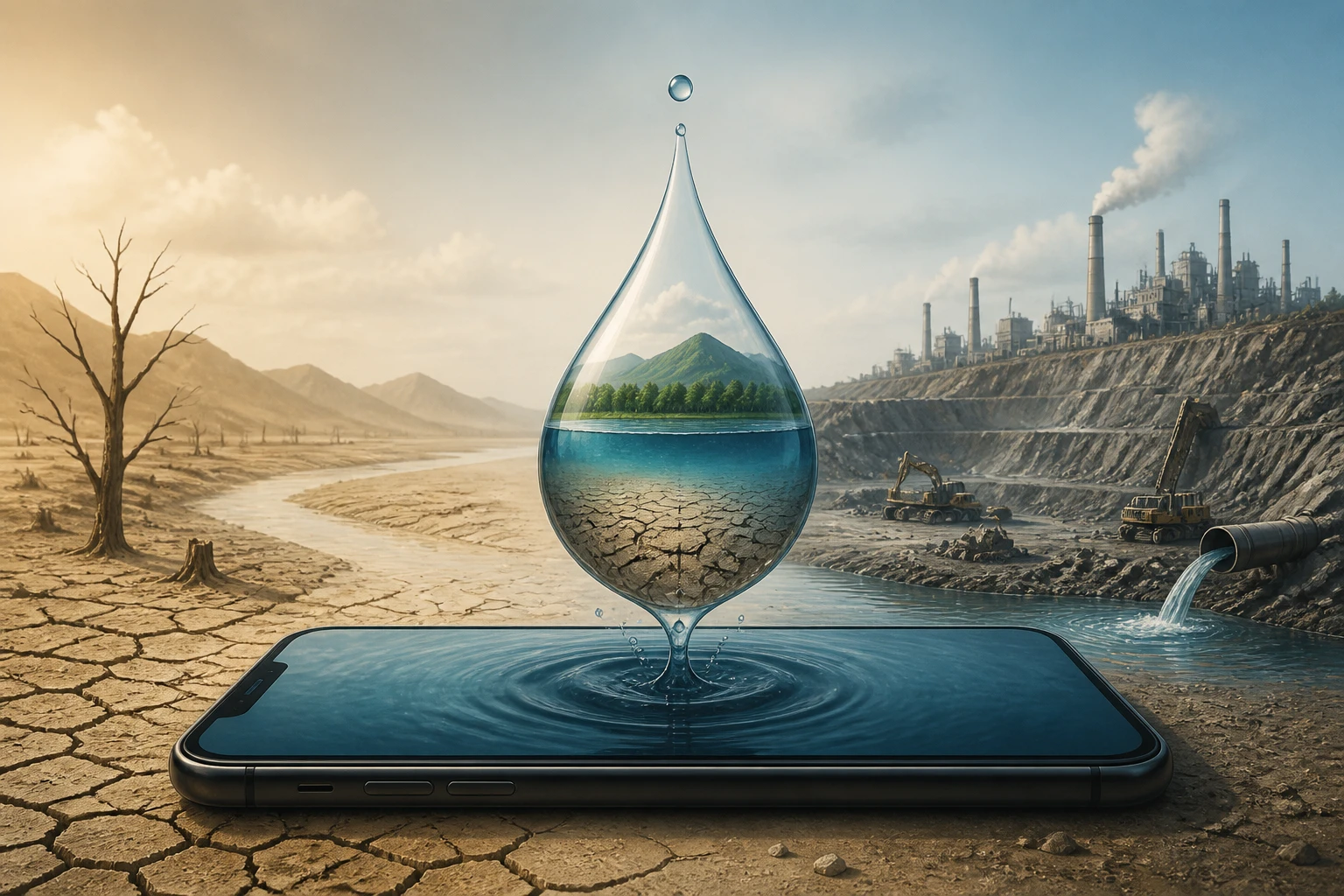
Picture this: You're scrolling through your Instagram feed during your lunch break, watching a video about someone's morning coffee routine. The 60-second clip loads in crisp 4K quality without buffering. What you don't realize is that this innocent moment of digital consumption just used approximately 5.5 liters of water - enough for a person to survive half a day in drought conditions. Now multiply this by India's 750 million smartphone users consuming hours of digital content daily, and you'll begin to understand the magnitude of the ₹2 lakh crore water crisis hiding behind every tap, swipe, and stream. This isn't about the obvious water usage you see - it's about the invisible virtual water footprint of our increasingly digital lives that's quietly draining India's already stressed water resources.
The Problem Defined
India's digital revolution has created an unprecedented demand for data centers, the massive facilities that power everything from your WhatsApp messages to Netflix streams. These facilities consume enormous amounts of water for cooling their servers, which must operate 24/7 at optimal temperatures to prevent system failures.
Think of a data center like a giant kitchen during a wedding feast. Just as cooks need constant cooling to work efficiently in the heat, computer servers generate massive amounts of heat and need continuous cooling to function. The preferred method? Water-based cooling systems that can consume anywhere from 1.8 to 3 liters of water per kilowatt-hour of energy used.
Here's where the numbers become staggering: India's data center industry is projected to reach ₹2 lakh crore by 2025, with power consumption expected to hit 35 billion units annually. This translates to a potential water consumption of 105 billion liters per year - equivalent to the annual water needs of approximately 14 million people.
The problem is compounded by location choices. Most hyperscale data centers are concentrated in water-stressed regions like Haryana, Tamil Nadu, and Maharashtra. Amazon Web Services has major facilities in Mumbai and Hyderabad, while Microsoft Azure operates extensively from Pune - all cities already grappling with severe water scarcity issues.
What makes this crisis particularly insidious is its invisibility. Unlike industrial pollution or agricultural water usage, the digital water footprint remains hidden from public consciousness. Every video call, every cloud backup, every streaming session contributes to this growing demand, creating what experts call "virtual water stress" - where our digital habits in water-abundant areas contribute to water scarcity elsewhere.
Analysis
The economic implications of this hidden water crisis extend far beyond environmental concerns. Data center operators face a complex balancing act between operational efficiency, regulatory compliance, and sustainable growth. Water scarcity directly impacts their operational costs, as alternative cooling methods can increase energy consumption by 20-30%, significantly affecting profit margins.
From a policy perspective, India lacks comprehensive regulations specifically addressing data center water usage. The Bureau of Energy Efficiency has guidelines for energy consumption but water usage remains largely unregulated. This regulatory gap creates a situation where data center expansion can proceed without adequate consideration of local water stress levels.
The business implications are multifaceted. Companies like Reliance Jio and Bharti Airtel, which operate extensive data infrastructure, must factor in long-term water availability when planning expansion. International cloud providers entering India face the challenge of maintaining global operational standards while adapting to local water constraints.
Consider the economic multiplier effect: A single large data center employs 200-500 people directly and supports thousands of jobs in the digital ecosystem. However, if water scarcity forces operational constraints or relocations, entire digital economic clusters could be disrupted. The IT services industry, which contributes 8% to India's GDP, depends entirely on reliable data center infrastructure.
The agricultural angle presents another layer of complexity. Data centers often compete directly with farmers for groundwater resources. In states like Karnataka, where both IT parks and agricultural activities coexist, water allocation becomes a zero-sum game during drought periods.
Climate change amplifies these challenges exponentially. Rising temperatures increase cooling requirements, while erratic monsoons make water availability unpredictable. This creates a feedback loop where climate change increases data center water consumption, while the digital economy's growth contributes to carbon emissions that worsen climate change.
The social equity dimension cannot be ignored. Wealthy urban populations consume data services that require water resources, often at the expense of rural communities. This creates what economists call "environmental inequality" - where the benefits and costs of development are inequitably distributed across socioeconomic lines.
Real-World Examples
Google's Hamina data center in Finland showcases innovative water management, using seawater for cooling and achieving a Power Usage Effectiveness (PUE) of 1.08 - among the most efficient globally. However, replicating this model in landlocked Indian locations presents significant challenges.
Microsoft's Project Natick experimented with underwater data centers, demonstrating 5 times better reliability than land-based facilities while using ocean water for natural cooling. While not directly applicable to India's geography, it highlights the innovation potential in sustainable data center design.
In India, CtrlS Datacenters has pioneered rainwater harvesting and wastewater recycling at their Hyderabad facility, reducing freshwater consumption by 40%. Their approach includes using treated wastewater from nearby sewage treatment plants for cooling, demonstrating viable local solutions.
Sify Technologies implemented free air cooling technology in their Chennai facility, reducing water consumption by 60% during cooler months. However, this approach becomes ineffective during peak summer temperatures, highlighting the climate-specific challenges in Indian conditions.
Amazon's sustainability initiatives in Virginia include water stewardship programs that return more water to the community than their data centers consume. They've invested in water restoration projects that offset their consumption by 115%, creating a net positive water impact.
The Challenge
The complexity of addressing this crisis lies in the interconnected nature of digital infrastructure, economic growth, and resource management. Unlike traditional industries, data centers cannot easily relocate due to latency requirements - the need to serve users with minimal delays.
Regulatory challenges are particularly thorny. Water allocation involves multiple government levels - central, state, and local authorities often have conflicting priorities. The National Water Policy focuses primarily on agriculture and drinking water, leaving industrial usage in regulatory gray areas.
Technical solutions like air cooling and liquid immersion cooling exist but require significant capital investment and technical expertise. Many smaller data center operators lack the resources for such upgrades, creating a technology adoption gap between large and small players.
Economic incentives remain misaligned. Water pricing in most Indian states doesn't reflect true scarcity costs, making water-intensive operations artificially cheap. Without proper pricing signals, market-based solutions struggle to emerge naturally.
The scale of growth makes solutions even more challenging. India's data consumption is growing at 25% annually, meaning any efficiency gains risk being offset by absolute growth in demand.
Future Implications
The trajectory of this crisis will fundamentally reshape India's digital economy landscape. Data center consolidation toward more water-efficient facilities seems inevitable, potentially disadvantaging smaller operators who cannot invest in advanced cooling technologies.
Geographic redistribution of data infrastructure may emerge, with facilities migrating toward coastal areas or regions with better water availability. This could alter India's IT ecosystem geography, potentially affecting employment patterns in traditional tech hubs.
Innovation acceleration in water-efficient technologies appears certain. Companies investing early in sustainable cooling solutions may gain significant competitive advantages as water regulations tighten.
The crisis may catalyze policy reform toward comprehensive water pricing mechanisms and environmental impact assessments for digital infrastructure. This could establish India as a global leader in sustainable data center practices.
Consumer behavior may eventually shift toward "water-conscious" digital consumption, similar to current energy efficiency awareness. This could drive demand for green cloud services and transparent water footprint reporting.
Looking Ahead
The ₹2 lakh crore question isn't whether India can continue its digital growth trajectory - it's whether we can decouple digital progress from water consumption fast enough to avoid a systemic crisis. As you stream your next video or backup photos to the cloud, consider this: Is our digital future worth depleting the water security of future generations?