

Overview
Picture this: you're rushing to catch the 8:15 AM train, clutching your morning latte in that familiar brown paper cup, feeling pretty good about choosing the "eco-friendly" option over plastic. After all, paper comes from trees, it biodegrades naturally, and it doesn't contribute to those horrifying ocean plastic islands we see on social media, right? Well, here's a plot twist that might make you rethink your morning routine: that paper coffee cup you're holding is likely worse for the environment than its plastic counterpart. This revelation isn't just about coffee cups—it's about how greenwashing and oversimplified environmental messaging have led us to make choices that feel good but actually cause more harm. The reality involves complex manufacturing processes, hidden plastic linings, and recycling challenges that make your "sustainable" morning ritual surprisingly destructive.
The Problem
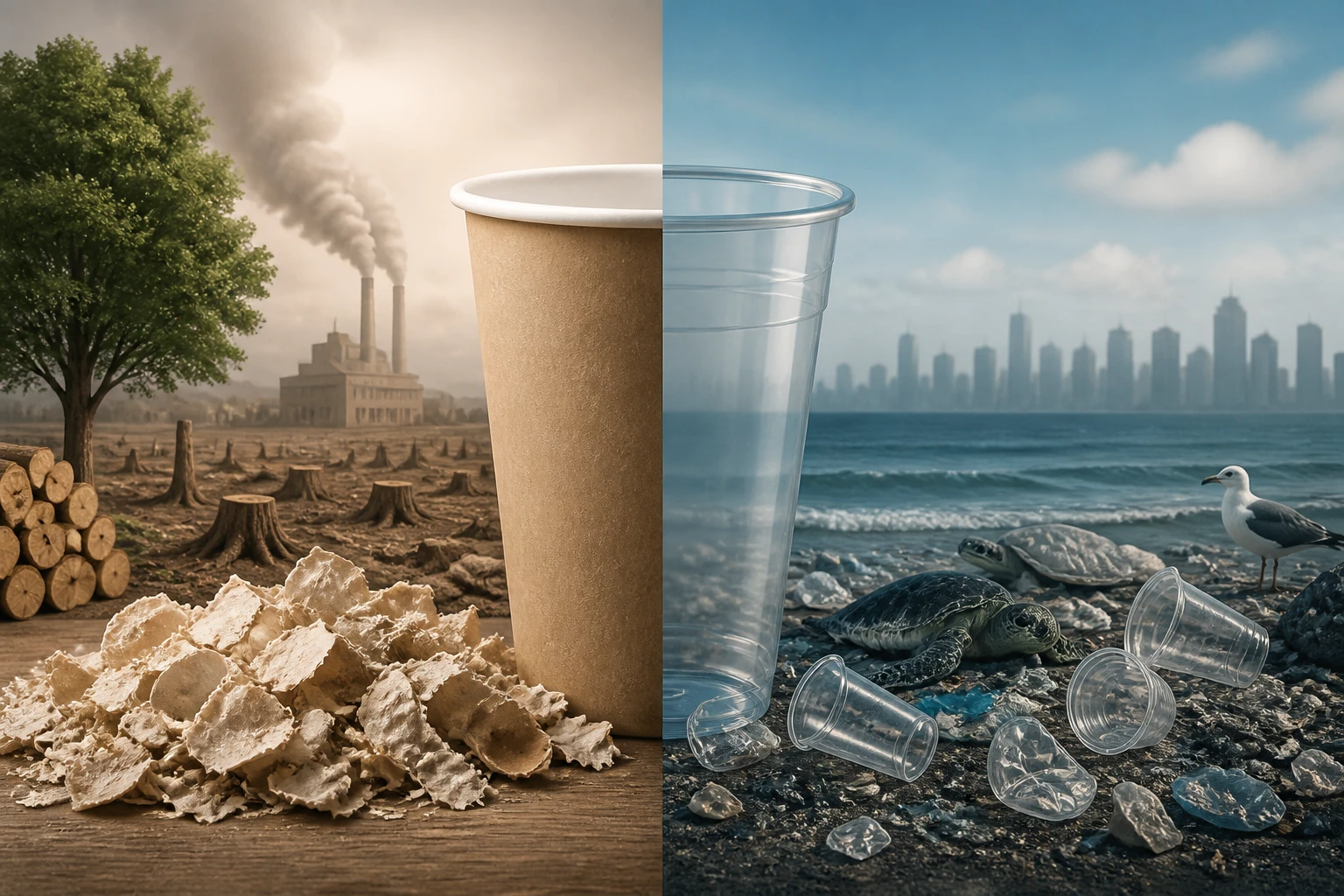
The coffee cup industry produces approximately 600 billion disposable cups annually worldwide, with paper cups representing about 70% of this market. Here's what most consumers don't realize: paper cups aren't actually made of just paper. They're lined with a thin layer of polyethylene plastic to prevent liquids from soaking through, making them a hybrid product that combines the worst aspects of both materials. This plastic lining makes paper cups nearly impossible to recycle through standard municipal programs—less than 1% of paper coffee cups are successfully recycled globally. Meanwhile, the manufacturing process for paper cups requires 20% more energy and produces 70% more air pollutants compared to plastic cup production. The environmental impact extends beyond disposal: paper cup production requires significant water usage, chemical processing for pulp creation, and transportation of heavier materials, creating a carbon footprint that often exceeds that of plastic alternatives before the cup even reaches your hands.
Analysis
From a manufacturing perspective, paper cups require intensive resource extraction and processing. Creating the paper pulp involves harvesting trees, chemical bleaching, and energy-intensive drying processes. The plastic lining—ironically necessary to make paper cups functional—adds another layer of complexity, requiring petroleum-based materials and specialized application processes. Economically, this translates to higher production costs that coffee shops ultimately pass to consumers through pricing.
The policy implications are equally complex. Many cities have implemented plastic bag bans and plastic straw restrictions while simultaneously promoting paper alternatives without considering lifecycle impacts. San Francisco's 2019 disposable foodware ordinance, for instance, mandated compostable materials but created unintended consequences when the required industrial composting infrastructure couldn't handle the volume, leading to most "compostable" cups ending up in landfills anyway.
From a business standpoint, coffee chains face a challenging paradox. Consumer perception studies show that 78% of customers view paper cups as more environmentally friendly, creating market pressure to offer paper despite its environmental drawbacks. This misalignment between consumer preferences and environmental reality forces businesses to choose between customer satisfaction and genuine sustainability—a choice that often favors perception over science.
Real-World Examples
Starbucks discovered this paradox firsthand during their sustainability initiatives. Despite investing millions in developing recyclable paper cups, the company found that their cups were still ending up in landfills due to infrastructure limitations. In 2018, they pivoted to testing reusable cup programs and strawless lids, acknowledging that paper wasn't the solution they'd hoped for.
McDonald's faced similar challenges in the UK, where they introduced paper straws to replace plastic ones in 2018. The backlash was swift—customers complained that paper straws dissolved in drinks, and environmental scientists pointed out that the manufacturing impact was significantly higher than plastic alternatives. The company eventually had to redesign their entire beverage system rather than simply swapping materials.
Research from Cardiff University found that paper cup production generates 108g of CO2 equivalent compared to 53g for polystyrene cups. Dr. Sarah Thompson, who led the study, explained: "We've created a false dichotomy where consumers think they must choose between paper and plastic, when the real solution lies in reusable alternatives and systemic changes to how we consume beverages."
The Challenge
The fundamental issue isn't choosing between paper and plastic—it's that single-use culture itself is unsustainable. Switching materials without addressing consumption patterns is like rearranging deck chairs on the Titanic. Additionally, recycling infrastructure varies dramatically by location, meaning a cup that's technically recyclable in one city becomes waste in another. Consumer behavior change proves difficult when convenient alternatives require planning and habit modification that busy professionals struggle to maintain consistently.
Future Implications
The coffee cup dilemma reveals a broader truth about environmental solutions: intuitive choices aren't always sustainable choices. As working professionals increasingly prioritize sustainability, companies will need to move beyond material substitution toward circular economy models. This might include cup rental programs, significantly improved reusable cup incentives, or entirely new beverage delivery systems. Regulatory frameworks will likely evolve to consider lifecycle impacts rather than just material composition, potentially leading to policies that seem counterintuitive but deliver better environmental outcomes. The professionals who understand these complexities early will be better positioned to make purchasing decisions and career choices aligned with genuine sustainability rather than greenwashing marketing.
Looking Ahead
The next time you're standing in line for your morning coffee, consider this: the most sustainable cup might be the one you bring from home, regardless of what it's made of. But here's the deeper question—if we've gotten something as seemingly simple as paper versus plastic wrong, what other "eco-friendly" choices in our daily professional lives might actually be making things worse?